How to Renovate an Occupied Apartment Community Without Losing Residents

Renovating an apartment community while people live in it is a different job from renovating an empty building. The construction itself is familiar. The hard part is that every decision about schedule, access, noise, and safety now affects people who pay rent and can choose to leave.
What an occupied multifamily renovation involves
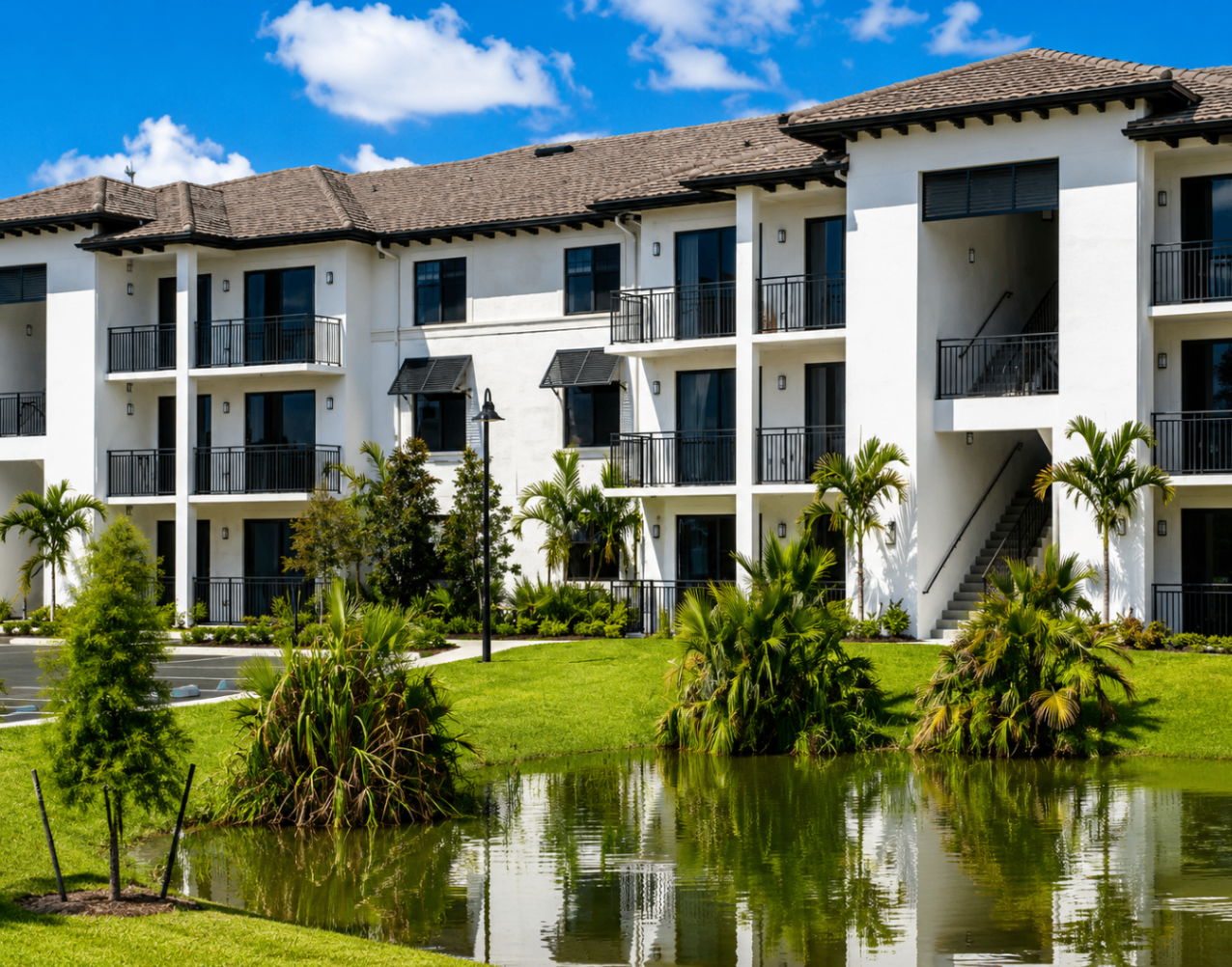
An occupied renovation upgrades a community in stages while most units stay leased. The work usually falls into three groups: unit interiors (kitchens, baths, flooring, lighting, fixtures), amenity spaces (clubhouse, fitness room, pool area, leasing office), and building exteriors (paint, stucco repair, roofing, balconies, walkways, site concrete). Each group disrupts residents in a different way, so each needs its own plan.
When owners take this on
Owners usually renovate in place for one of four reasons: a value-add plan after an acquisition, finishes that no longer compete on rent, deferred maintenance that has started to show up as leaks or failed inspections, or a lender or insurer requirement. Emptying the property would stop the income that pays for the work, so the renovation has to happen around the residents.
How the work is phased
Unit interiors are normally renovated on turn. When a lease ends and the resident moves out, the unit is renovated before it is leased again. A good contractor works to a fixed scope and a fixed number of working days per unit, so the leasing team knows when each unit comes back.
Exteriors and common areas are phased by building or by elevation. One building, or one side of one building, is under construction at a time. Parking, walkways, and entries are rerouted for that area only, and the crew finishes and cleans up before moving to the next.
Amenities are scheduled around use. Pool decks are best done outside peak season. A clubhouse can often be renovated in halves so the leasing office never closes.
Resident communication
Most complaints on an occupied job trace back to surprise. Residents accept a lot when they know what is coming. Good practice includes written notice before any work that affects a unit, a building, parking, or water and power; a posted schedule by building; one named contact at the property for construction questions; and fixed working hours that the crew actually keeps. Florida law generally requires reasonable notice before a landlord enters a unit for repairs, so entry notices should go through property management and follow the lease.
Safety and access
An occupied site has children, pets, deliveries, and people coming home at night. The contractor should keep every required exit open, fence and sign work areas, protect walkways under overhead work, keep fire alarms and sprinklers in service or arrange an approved fire watch when a system must be down, control dust with containment, and secure tools and materials at the end of every shift.
What goes wrong
The common failures are predictable: unit turns that run long and cost a month of rent each, water or power shutoffs without notice, parking taken away for longer than promised, exteriors opened up right before a storm, and several buildings torn up at once with none of them finished. Each one is a planning failure before it is a construction failure.
What drives the cost
Cost depends on the number of units and how many turn each month, the depth of the interior scope, the condition found behind old finishes (plumbing, electrical, water damage), how exteriors are accessed, the hours work is allowed, and how many separate mobilizations the phasing requires. Occupied work costs more per unit than vacant work because of protection, cleanup, and shorter working windows. That premium is usually much smaller than the rent lost by emptying buildings.
Florida considerations
Plan exterior and roofing phases around hurricane season, and never leave a building envelope open without a plan to close it quickly. Air conditioning is not optional here, so any HVAC outage needs to be short and announced. Older Florida properties often hide water damage behind tub surrounds, under windows, and at balcony doors, so carry an allowance for it. Most of this work needs permits, and inspection timing should be built into the turn schedule.
Common follow-up questions
Can residents really stay during a full renovation?
Yes, in most cases. Interiors are done on vacant units as leases turn, and exteriors and amenities are done in phases. Residents live next to construction, not inside it.
How long does a renovated unit stay offline?
It depends on scope. A cosmetic turn takes far less time than a full kitchen and bath replacement. What matters is that the contractor commits to a fixed number of working days per unit type and reports against it every week.
The bottom line
An occupied renovation succeeds when the phasing plan, the notice plan, and the safety plan are settled before the first unit is opened. BellTower phases multifamily work so residents can stay in place. See our multifamily construction page or call (561) 225-1291.
Planning a project?
From brand-mandated hotel renovations to structural restorations, BellTower Associates delivers complex commercial projects on time and on budget across Florida.
Request a Bid